The Toshali National Crafts Mela is one of the largest and most prestigious handicraft and handloom expos in Eastern India. Held annually at the Janta Maidan in Bhubaneswar, Odisha, this mega event is organized by the State Handlooms, Textiles & Handicrafts Department in collaboration with the Development Commissioner (Handicrafts) and Development Commissioner (Handlooms), Government of India.
Named after the ancient historical city of Toshali (the administrative center of Kalinga near Dhauli), the fair usually spans 12 to 15 days in December or January. It brings together over 500 weavers, sculptors, and traditional craftspeople from across India, turning Bhubaneswar into a bustling hub of ethnic art, regional cuisine, and cultural performances.
Objectives and Cultural Significance
Modeled after national fairs like the Surajkund Crafts Mela, Toshali Mela bridges the gap between rural master artisans and urban buyers.
┌────────────────────────────────────────────────────────────────────────┐
│                   CORE PILLARS OF TOSHALI CRAFTS MELA                  │
├────────────────────────────────────────────────────────────────────────┐
│ • Artisan Empowerment  ──► Direct market exposure without middlemen    │
│ • Cultural Exchange    ──► Pan-Indian handlooms & crafts under one roof│
│ • Heritage Tourism     ──► Showcasing Odia craftsmanship to visitors  │
│ • Culinary & Music     ──► Regional food court & nightly cultural shows│
└────────────────────────────────────────────────────────────────────────┘
-
Direct Artisan Market: The fair provides direct commercial opportunities to weavers, artisans, and self-help groups (SHGs), including National and State Awardees, allowing them to sell authentic handcrafted goods directly to consumers.
-
Promoting Odisha’s GI Products: Special pavilion zones highlight Odisha’s Geographical Indication (GI) tagged treasures—such as Kotpad handlooms, Boyanika weaves, Pipli appliqué work, and Pattachitra paintings.
Key Highlights & Attraction Zones
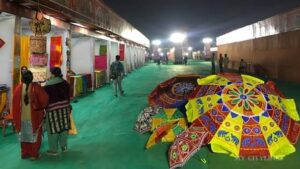
Toshali Mela is structured into distinct thematic zones for visitors:
Summary for Travelers & Shoppers
| Feature | Details |
| Location | Janta Maidan, Chandrasekharpur, Bhubaneswar, Odisha |
| Schedule | Annually in December / January (12 to 15 days) |
| Key Products | Sambalpuri Sarees, Pattachitra, Dhokra, Pipli Appliqué, Terracotta |
| Organizers | Dept. of Handlooms, Textiles & Handicrafts (Govt. of Odisha) |
Quick Summary
-
When: December / January (Annual 12-to-15-day mela).
-
Location: Janta Maidan, Bhubaneswar, Odisha.
-
Core Symbol: The iconic replica of an ancient Odishan temple gate installed at the main entrance.
-
Primary Objective: Sustaining traditional craftsmanship, empowering rural weavers, and promoting ethnic Indian heritage.