Snana Yatra (also known as Debasnan Purnima) is the majestic ceremonial bathing festival of Lord Jagannath, Lord Balabhadra, Devi Subhadra, and Sudarshana at the 12th-century Srimandir in Puri, Odisha. Celebrated on the full moon day (Purnima) of the Hindu lunar month of Jyestha (typically May or June), it marks the official birthday of Lord Jagannath.
It is the first major public event in the legendary annual Ratha Yatra cycle. On this day, the sacred deities step out of the inner sanctum (Garbhagriha) to a raised platform called the Snana Mandap, allowing devotees from all walks of life—regardless of caste or creed—to view the Lords directly.
Mythological Origin & Significance
According to the Skanda Purana, King Indradyumna, who originally installed the wooden deities in Puri, performed the first grand ceremonial bath on this full moon day.
┌────────────────────────────────────────────────────────────────────────┐
│                     SIGNIFICANCE OF SNANA YATRA                        │
├────────────────────────────────────────────────────────────────────────┐
│ • Divine Birthday     ──► Marks the incarnation day of Lord Jagannath  │
│ • Universal Darshan   ──► Deities step outside for all devotees to see │
│ • 108 Sacred Pitchers ──► Bathing with herbal & spiced well water     │
│ • Gaja Besha          ──► Transformation into Elephant God form        │
└────────────────────────────────────────────────────────────────────────┘
Devotees believe that a single glimpse (Darshan) of Lord Jagannath on the Snana Mandap cleanses a person of all sins, giving rise to the famous Odia proverb: “Gundicha Mandapam Yanti Ye Bhaktaya Muditanvita, Te Samastam Papani Mukta Yanti Harer Padam.”
Key Rituals of Debasnan Purnima
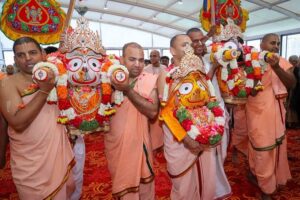
The rituals of Snana Yatra follow a meticulous, centuries-old sequence managed by specific servitor groups (Sewayatas).
The Anasara Period & Patti Dian
During the 15-day Anasara period that immediately follows Snana Yatra:
-
Public view of the wooden deities is suspended.
-
Devotees view three traditional Odia scroll paintings (Patti Dian) representing Lord Ananta Vasudeva (Balabhadra), Goddess Bhuvaneshwari (Subhadra), and Lord Ananta Narayana (Jagannath).
-
The deities are offered only herbal medicines, fruit juices, and Dasamula decoctions prepared by the temple’s Raj Vaidya (royal physician).
Summary for Culture Lovers
-
When: Full Moon day (Purnima) of Jyestha month (May/June).
-
Key Venue: Snana Mandap, Jagannath Temple, Puri.
-
Core Highlight: Public 108-pitcher bath followed by the elephant attire (Gaja Besha).
-
Next Event: Ratha Yatra (held 15 days after Snana Yatra).