Sitalsasthi (or Sital Sasthi) is a grand week-long carnival celebrated with immense fervor in Western Odisha, particularly in the historic city of Sambalpur. Falling on the sixth day (Sasthi) of the bright fortnight of the lunar month of Jyestha (typically late May or June), the festival enacts the divine marriage of Lord Shiva (Devadeva Mahadeva) and Goddess Parvati.
Unlike conventional temple rituals, Sitalsasthi operates as a real human wedding. Ordinary families from the city volunteer to act as the parents of Goddess Parvati and adopt Lord Shiva as their son-in-law, fulfilling all social, ritual, and legal customs of a traditional Odia wedding.
Mythological Origin & Cultural Purpose
According to ancient scriptures, the demon Tarakasura had obtained a boon that he could only be killed by the son of Lord Shiva. However, after the death of Sati, Lord Shiva was immersed in deep, unending meditation (Tapasya).
Goddess Shakti took birth as Parvati, daughter of King Himavan, and underwent severe penance to win Shiva’s love. Moved by her devotion, Shiva agreed to marry her. The intense heat of Shiva’s meditation was cooled (Sital) by this divine union, giving the festival its name Sitalsasthi (the “Cooling Sixth Day”).
┌────────────────────────────────────────────────────────────────────────┐
│                   THE UNIQUE HUMANIZED CONCEPT                         │
├────────────────────────────────────────────────────────────────────────┤
│ • Human Parents Chosen ──► Local couple acts as Parvati's parents     │
│ • Kanyadaan Ritual    ──► Full Odia wedding ceremony & dowry           │
│ • Citywide Carnival   ──► Night-long procession of folk dancers        │
│ • Homecoming (Baraat) ──► Deities tour Sambalpur blessing homes       │
└────────────────────────────────────────────────────────────────────────┘
Key Ritual Sequence of the Festival
The festival progresses across a meticulously organized series of rituals over five main days.
The Grand Night Carnival
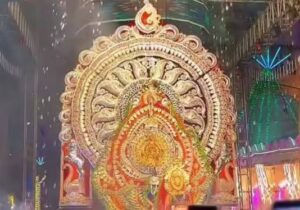
The defining spectacle of Sitalsasthi is the overnight Baraat procession. It is one of India’s biggest open-air cultural carnivals, drawing artists and performers from across the country.
| Element | Features |
| Folk Performances | Energetic Sambalpuri Dalkhai, Rasarkeli, Ghumura, Chhau, and Paika dances accompanied by traditional drums (Dhol, Nishan, Tasa). |
| National Troupes | Guest artists featuring Maharashtrian Dhol Tasha, Kerala’s Chenda Melam, Rajasthani folk dances, and acrobatics. |
| Illuminated Floats | Massive glowing light gates (Lighting Medhas) and mechanical tableaux portraying stories from Hindu Puranas. |
Major Shiva temples of Sambalpur—including Nandapara (Loknath Baba), Balibandha (Jagannath Baba), and Jharuapara (Jageshwar Baba)—compete creatively to showcase the grandest procession.
Summary for Culture Enthusiasts
-
When: May or June (6th day of Jyestha month).
-
Key Location: Sambalpur, Western Odisha.
-
Core Spirit: Humanization of the divine, community kinship, and a celebration of indigenous folk arts.