Sabitri Brata (also known as Savitri Amavasya) is one of the most sacred fasts observed by married women in Odisha and eastern parts of India. Falling on the new moon day (Amavasya) of the lunar month of Jyestha (May/June), this fasting ritual commemorates the legendary devotion of Sabitri, who tricked Yamaraja (the Lord of Death) into restoring the soul of her deceased husband, Satyabana.
Married women observe a strict, day-long fast (Nirjala Brata) praying for the long life, health, prosperity, and protection of their husbands, mirroring the ideal marital commitment immortalized in the Mahabharata.
The Epic Legend of Sabitri & Satyabana
The epic story behind the fasting tradition is drawn from the Vana Parva of the Mahabharata.
┌────────────────────────────────────────────────────────────────────────┐
│                        LEGEND OF SABITRI & SATYABANA                   │
├────────────────────────────────────────────────────────────────────────┤
│ • The Prophecy       ──► Sabitri marries Satyabana knowing he has 1    │
│                          year of life remaining                        │
│ • The Fateful Day    ──► Satyabana collapses while cutting wood        │
│ • Confronting Death  ──► Sabitri follows Yamaraja into the underworld  │
│ • The Witty Boons    ──► Wins 3 clever boons without asking directly   │
│                          for life, forcing Yamaraja to release Satyabana│
└────────────────────────────────────────────────────────────────────────┘
-
Undeterred Choice: Princess Sabitri chose Satyabana—an exiled prince living as a woodsman—despite being warned by Sage Narada that Satyabana was destined to die exactly one year after marriage.
-
Confronting Yamaraja: When Satyabana collapsed under a Banyan tree on the predicted day, Yamaraja carried away his soul (Jiva). Sabitri relentlessly followed the Lord of Death into the realm of the dead. Impressed by her intellect, righteousness (Dharma), and devotion, Yamaraja offered her three boons—excluding her husband’s life.
-
The Masterstroke: Sabitri asked for the vision of her blind in-laws, restoration of their kingdom, and lastly, to be the mother of a hundred sons born of Satyabana. Bound by his own boon to grant her sons, Yamaraja was ethically compelled to release Satyabana’s soul, restoring him to life under the Banyan tree.
Ritual Sequence of Sabitri Brata
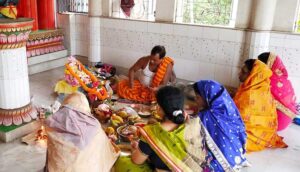
The festival day revolves around sacred baths, fasting, reading the Sabitri Vrata Katha, and worshipping the Banyan tree (Bara Gachha).
Traditional Offerings & Fruit Delicacies
Because Sabitri Brata falls during peak summer, cooked grain meals are strictly avoided during the fast. Instead, a lavish array of raw, seasonal fruits is offered and consumed:
| Offering | Ingredients & Symbolism |
| Pana & Fruit Mixture | A refreshing blend of mashed banana, ripe mango, jackfruit, cottage cheese (Chena), coconut, and sweet milk. |
| Seasonal Summer Fruits | Mangoes (Amba), Jackfruit (Pana), Palm fruit (Tala Saj), Lychee, Blackberry (Jamu), and Watermelon. |
| Brata Samagri (Suaag Basket) | A decorative bamboo tray containing Sindoor, red ribbon, mirrors, combs, Alta, and betel leaves offered to the Goddess. |
| Banyan Twig & Leaves | Twigs of the Banyan tree placed on the alter to symbolize unbroken life force. |
Quick Summary for Culture Enthusiasts
-
When: New Moon day (Amavasya) of Jyestha month (May / June).
-
Core Symbol: Goddess Sabitri, Satyabana, and the sacred Banyan Tree (Vata Vriksha).
-
Key Custom: Strict fast (Nirjala Brata) observed by married women for their husbands’ longevity.
-
Primary Offering: Raw seasonal summer fruits (Mango, Jackfruit, Palm fruit) and sweet Pana.