Parab (derived from Parva, meaning festival) is the premier mega-cultural festival of indigenous tribes held annually in the Koraput district of southern Odisha. Organized by the District Council of Culture under the aegis of Odisha Tourism, this month-long event culminates in a grand three-day spectacle every year in November or December.
Serving as a mega-platform to preserve and showcase the indigenous art, music, dance, sports, and handicrafts of southern Odisha, Parab brings together over 62 distinct tribal communities—including the Paroja, Bonda, Gadaba, Kondh, Bhatra, and Saora—transforming the Eastern Ghats region into a vibrant hub of heritage.
Objectives and Cultural Significance
Started in 1996, Parab was created to safeguard the rich indigenous heritage of the undivided Koraput region and integrate tribal communities into mainstream tourism.
┌────────────────────────────────────────────────────────────────────────┐
│                      CORE PILLARS OF PARAB FESTIVAL                    │
├────────────────────────────────────────────────────────────────────────┤
│ • Indigenous Heritage ──► Preserving music, language, & folk dances    │
│ • Tribal Sports       ──► Traditional archery, wrestling, & boat races │
│ • Craft & Handicrafts ──► Pallishree Mela featuring organic produce    │
│ • Social Unity        ──► Grassroots competitions from Gram Panchayats │
└────────────────────────────────────────────────────────────────────────┘
-
Grassroots Involvement: The festival operates on a unique bottom-up model. Competitions in dance, song, and traditional sports begin at the Gram Panchayat level, progressing through Block and Sub-division levels before winners reach the district-level stage in Koraput town.
-
Preserving Endangered Traditions: It offers an authentic venue for rare tribal dances, indigenous musical instruments like the Dhemsa drum, Tudum, and Mahuri, and traditional body adornments.
Key Highlights and Event Progression
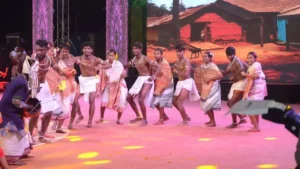
The festival spans several weeks of local events before concluding with a grand state-level celebration:
Summary for Travelers and Researchers
| Feature | Details |
| Location | Koraput Town, Southern Odisha (Eastern Ghats) |
| Timing | November to December (Month-long festivities, 3-day mega climax) |
| Key Attractions | Dhemsa Dance, Kotpad Handloom, Tribal Archery, Pallishree Mela |
| Participating Tribes | Paroja, Bonda, Gadaba, Kondh, Bhatra, Saora, Koya |
Quick Summary
-
When: Late November to mid-December.
-
Location: Koraput District, Odisha.
-
Core Symbol: The synchronized circle steps of the Dhemsa dance and sound of Mahuri flutes.
-
Primary Objective: Preserving and promoting the authentic indigenous culture, crafts, and sports of Odisha’s southern tribes.