Maha Shivaratri, known affectionately as Jagara in Odisha and other eastern regions, is one of the most auspicious Hindu festivals dedicated to Lord Shiva. Celebrated on the 14th day (Chaturdashi) of the dark fortnight (Krishna Paksha) in the lunar month of Phalguna (February/March), Jagara literally means “night-long vigil.”
While Shivaratri is observed monthly, Maha Shivaratri (“The Great Night of Shiva”) marks the cosmic convergence of Shiva and Parvati, symbolizing the overcoming of darkness and ignorance in the world.
Spiritual & Mythological Significance
The night of Jagara is steeped in rich Vedic and Puranic lore:
┌────────────────────────────────────────────────────────────────────────┐
│                        SIGNIFICANCE OF JAGARA                          │
├────────────────────────────────────────────────────────────────────────┤
│ • Cosmic Union       ──► Marriage of Lord Shiva & Goddess Parvati      │
│ • Tandava Nritya     ──► Shiva performs the dance of creation & flux   │
│ • Emergence of Linga ──► Manifestation of Shiva as the infinite light  │
│ • Halahala Poison   ──► Shiva consumes poison to protect the universe │
└────────────────────────────────────────────────────────────────────────┘
-
The Cosmic Wedding: It celebrates the divine union of Lord Shiva (consciousness) and Goddess Parvati (nature/energy).
-
Consuming the Halahala: During the churning of the cosmic ocean (Samudra Manthan), a deadly poison named Halahala emerged. Lord Shiva drank the poison to save the universe, holding it in his throat, which turned blue (earning him the name Neelakantha). Devotees stay awake all night to express gratitude and keep vigil with the Lord.
-
The Night of Awakening: The planetary positions on this night align such that there is a natural upsurge of spiritual energy in the human system, making meditation and night-long awareness particularly powerful.
Key Traditions & Rituals of Jagara
The festival combines rigorous austerity, ritualistic bath (Abhisheka), and collective community prayer.
The Grand Celebration at Lingaraj Temple, Odisha
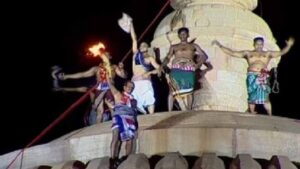
In Odisha, Jagara holds a unique cultural stature. The historic 11th-century Lingaraj Temple in Bhubaneswar becomes the spiritual epicenter of the state.
-
The Courageous Climb: A specialized servitor (Samartha Sewayat) climbs the massive 180-foot stone spire of Lingaraj Temple without any harness, carrying the heavy, flaming Mahadipa to the peak.
-
Sea of Earthen Lamps: The entire temple courtyard is illuminated by tens of thousands of brass and earthen diya lamps held by devotees singing devotional hymns (Bhajans).
Quick Summary for Spiritual Seekers
-
When: Phalguna Krishna Chaturdashi (February / March).
-
Core Practice: Nirjala Vrata (Fasting) and Jagara (Night Vigil).
-
Key Offering: Tridala (Three-leafed Bael / Bel Patra).
-
Climax Event: Hoisting of the Mahadipa atop the temple spire.