Magha Saptami (also known as Chandrabhaga Mela or Ratha Saptami) is one of the most ancient, sacred, and visually arresting religious congregations in Odisha. Falling on the seventh day (Saptami) of the bright fortnight of the Hindu lunar month of Magha (typically late January or February), this grand festival celebrates the birth and annual celestial transit of the Sun God (Surya Dev).
The epicentre of this festival is Chandrabhaga Beach, located just three kilometers from the world-famous 13th-century Konark Sun Temple. On this auspicious night, hundreds of thousands of pilgrims, sadhus, and tourists from across India gather on the shores of the Bay of Bengal to take a holy dip in the sacred waters at dawn and witness the first rays of the rising sun.
Mythological Origins: The Healing of Samba
The spiritual foundation of Magha Saptami is deeply rooted in ancient Puranic legends, primarily recorded in the Samba Purana and Bhavishya Purana:
┌────────────────────────────────────────────────────────────────────────┐
│                        THE LEGEND OF SAMBA                             │
├────────────────────────────────────────────────────────────────────────┤
│ • Curse of Leprosy ──► Samba (son of Krishna) cursed by sage Durvasa   │
│ • 12-Year Penance ──► Performs severe austerities for Sun God (Surya)  │
│ • Divine Healing   ──► Surya cures Samba on Magha Saptami at Konark    │
│ • Temple Origin    ──► Samba consecrates Sun idol at Chandrabhaga river│
└────────────────────────────────────────────────────────────────────────┘
According to legend, Samba, the handsome son of Lord Krishna and Jambavati, was cursed with severe skin affliction (leprosy) after incurring the anger of Sage Durvasa. To seek redemption, Samba traveled to the Maitreya forest along the banks of the sacred Chandrabhaga River (now an ocean inlet near Konark) and performed rigorous penance for 12 years.
Pleased by his devotion, Lord Surya cured Samba on the seventh day of the month of Magha. In gratitude, Samba discovered an idol of the Sun God in the riverbed and enshrined it, giving birth to the sacred tradition of Sun worship at Konark. Devotees believe taking a holy dip at Chandrabhaga on this exact date cures skin ailments, purifies sins, and grants vitality.
Key Ritual Sequence of Magha Saptami
The rituals of Magha Saptami begin long before midnight and continue past sunrise in a rhythmic flow of devotion.
Cultural Significance & The Great Mela
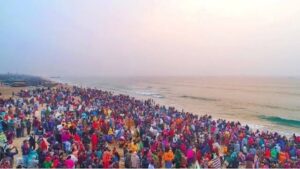
Beyond its deep spiritual roots, Magha Saptami hosts the Chandrabhaga Mela—a bustling week-long fair near the coast:
| Aspect | Highlights |
| Gathering of Ascetics | Naga Sadhus and ascetics from various Akharas setup temporary camps (Akharas) on the beach, offering discourses and blessings. |
| Traditional Commerce | Local artisans, potters, and weavers sell handloom items, wooden utensils, brassware, and traditional remedies. |
| Culinary Delicacies | Stalls serve hot Gupchup, Kora Khai (sweetened puffed paddy), Cuttack Dahibara, and fresh seasonal sweets. |
Summary for Travelers & Pilgrims
-
When: 7th day (Saptami) of the bright fortnight in the month of Magha (January or February).
-
Primary Venue: Chandrabhaga Beach & Konark Sun Temple Complex, Puri district, Odisha.
-
Core Spirit: Health, solar worship, purification, and community bonding along the coast.