Kumar Purnima is one of the most vibrant and aesthetically pleasing festivals celebrated across Odisha. Falling on the full moon day (Purnima) of the Hindu lunar month of Ashvina (typically October), it marks the end of the monsoon season and welcomes the crisp, clear autumn nights.
The festival is primarily dedicated to Kumara (Lord Kartikeya), the handsome son of Lord Shiva and Goddess Parvati, as well as the Moon God (Chandra Dev). It is celebrated with great enthusiasm by young, unmarried girls who fast and perform traditional rituals to pray for a handsome, loving, and ideal life partner—much like Lord Kartikeya.
Mythological & Cultural Significance
According to Odia mythology, Lord Kartikeya was born on this full moon night. Known for his extraordinary charm, valor, and righteousness, he became the ideal benchmark for an ideal husband in folk traditions.
┌────────────────────────────────────────────────────────────────────────┐
│                   THE ESSENCE OF KUMAR PURNIMA                         │
├────────────────────────────────────────────────────────────────────────┤
│ • Birth of Kartikeya ──► Celebrates Lord Kumara's divine charm        │
│ • Autumn Full Moon  ──► Brightest moonlit night of the year            │
│ • Worship of Laxmi  ──► Welcoming the Goddess of Wealth into homes    │
│ • Youth Festival    ──► Songs, traditional games, and new clothing     │
└────────────────────────────────────────────────────────────────────────┘
Additionally, Kumar Purnima marks the night when Goddess Lakshmi (Gajalaxmi) is believed to visit houses at night. In many parts of Odisha—especially in districts like Dhenkanal and Kendrapara—Kumar Purnima kicks off a grand 7-to-11-day celebration of Gajalaxmi Puja.
Key Rituals: How Kumar Purnima is Celebrated
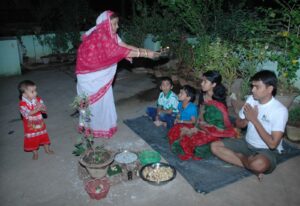
The day is filled with unique rituals that begin at sunrise and conclude under the glow of the full moon.
Traditional Food & Cultural Games
Kumar Purnima is synonymous with seasonal delicacies, music, and physical games that highlight traditional Odia culture:
| Aspect | Description |
| Chanda Bhoga | The primary sacred food offered to the moon god. A delicious, uncooked blend of Khai (puffed rice), grated coconut, ripe bananas, Chenna (cottage cheese), milk, and cardamom. |
| Puchi Khela | A famous traditional dance-game played by young girls. It involves rapid alternate movement of legs in a squatting position while singing special Puchi songs. |
| Kuanra Punei Janha | Folk songs sung by girls throughout the day and evening, praising the beauty of the moon and expressing hopes for a joyful future. |
The Celebration of Gajalaxmi Puja
While girls celebrate Kumar Purnima in households, entire towns transform into illuminated spectacles for Gajalaxmi Puja. Goddess Lakshmi is worshipped holding lotus flowers while flanked by elephants pouring holy water over her.
-
Dhenkanal Gajalaxmi Puja: Famous across India for its massive, illuminated pandals, intricate clay idols, and street fairs lasting over a week.
-
Kendrapara & Choudwar: Known for elaborate traditional pandal decorations and community feasts.
Summary for Culture Lovers
-
When: Full Moon day (Purnima) of Ashvina month (October).
-
Key Symbol: The full moon, ridge gourd flowers (Janhi Phula), and Chanda Bhoga.
-
Core Spirit: Joyful celebration of youthfulness, grace, and seasonal transition into autumn.