Kumar Purnima—popularly known in colloquial Odia as Kora Puni or Kumar Punei—is one of the most cheerful and visually captivating autumn festivals in Odisha. Celebrated on the full moon day (Purnima) of the lunar month of Ashwin (September/October), this day marks the end of the 10-day Durga Puja festivities and welcomes the bright, soothing autumn moonlight (Sharad Ritu).
The word Kora refers to Lia Kora or Ukhuda (sweetened puffed rice offerings made with jaggery and coconut), while Puni is the regional Odia dialect for Purnima (Full Moon). The festival holds dual spiritual importance: it is celebrated by young unmarried girls worshipping the Sun and Moon for a life partner as handsome and virtuous as Kartikeya (Kumar), as well as by households observing Gaja Lakshmi Puja for wealth and prosperity.
Cultural & Mythological Significance
Kumar Purnima weaves together themes of youthfulness, astronomical beauty, and devotion.
┌────────────────────────────────────────────────────────────────────────┐
│                        CULTURAL & SPIRITUAL TRIAD                      │
├────────────────────────────────────────────────────────────────────────┤
│ • Worship of Lord Kumar ──► Kartikeya, the epitomize of youth & beauty  │
│ • Sun & Moon Worship    ──► Welcoming dawn (Sun) and moonlight (Moon)   │
│ • Gaja Lakshmi Puja     ──► Goddess of wealth worshipped at midnight    │
│ • Traditional Games     ──► Puchi dance and indoor games like Kaui Khela│
└────────────────────────────────────────────────────────────────────────┘
-
The Ideal Life Partner: Lord Kartikeya (Kumar), the son of Lord Shiva and Parvati, is considered the most handsome and valiant among the demigods. Unmarried girls perform rituals from dawn to moonrise, praying for a groom who embodies his qualities.
-
Kojagari Lakshmi Puja: Across eastern India, this night is celebrated as Kojagari Purnima. Legend says Goddess Lakshmi descends to Earth at midnight asking “Ko Jagarti?” (“Who is awake?”), bestowing divine wealth and prosperity upon those who spend the night worshipping her under the full moon.
Ritual Sequence of Kora Puni
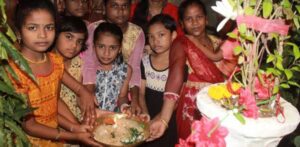
The festival transitions seamlessly from morning solar worship to night celestial celebrations.
Key Culinary Offerings
The food offerings on Kora Puni highlight seasonal autumn produce and dairy:
| Dish / Offering | Key Ingredients & Role |
| Lia Kora / Ukhuda | Puffed paddy bound with caramelized jaggery, coconut slices, and cardamom. This gives the festival its colloquial name Kora Puni. |
| Chanda Chakata | A rich mixture of fresh Chena (cottage cheese), milk, banana, sugar, and puffed rice, shaped into a crescent moon. |
| Tal Saj / Seasonal Fruits | Offerings of fresh autumn fruits like cucumber, tender coconut, sugarcane, and apples. |
Quick Summary for Culture Lovers
-
When: Full Moon day (Purnima) of Ashwin month (September/October).
-
Core Symbol: Full moon (Sharad Chandrika), Lord Kartikeya, and Goddess Lakshmi.
-
Key Culinary Delicacy: Sweetened puffed rice (Kora) and Chanda Chakata.
-
Defining Custom: Puchi dance by young girls and night-long Gaja Lakshmi Puja.