Govardhan Puja (also known as Giri Govardhan Puja or Annakut) is a vibrant Hindu festival celebrated on the day immediately following Diwali, during the first day (Pratipada Tithi) of the bright fortnight (Shukla Paksha) in the lunar month of Kartika (October/November).
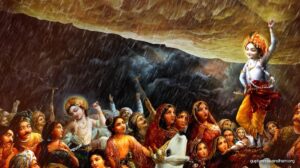
The festival celebrates the legendary event where Lord Krishna lifted the massive Govardhan Hill on his pinky finger to shield the villagers and cattle of Vrindavan from devastating torrential rains unleashed by an enraged Lord Indra. Govardhan Puja highlights a profound spiritual shift from ritualistic fear to loving devotion (Bhakti), while promoting deep environmental reverence for nature, cows, and natural ecosystems.
Mythological Legend: The Lifting of Govardhan Hill
The narrative of Govardhan Leela is detailed in the Srimad Bhagavatam and Vishnu Purana.
┌────────────────────────────────────────────────────────────────────────┐
│                        LEGEND OF GIRI GOVARDHAN                        │
├────────────────────────────────────────────────────────────────────────┤
│ • Sacrificial Redirection  ──► Krishna stops Indra's ritual, advising  │
│                                villagers to honor Govardhan Hill      │
│ • Indra's Enraged Wrath     ──► Lord Indra unleashes devastating      │
│                                storms (*Samvartaka*) over Vrindavan   │
│ • The Seven-Day Shield      ──► Krishna lifts Govardhan Hill on his   │
│                                little finger for 7 consecutive days   │
│ • Indra's Humbling          ──► Indra recognizes Krishna's divinity    │
│                                and seeks forgiveness                  │
└────────────────────────────────────────────────────────────────────────┘
-
Honoring the Ecosystem over Ritual: Young Lord Krishna questioned the villagers of Vrindavan about their annual grand sacrifice to Lord Indra (the Rain God). Krishna argued that their true sustenance came from Govardhan Hill, which provided fresh grass for cattle, timber, fruits, and fresh spring water. Convinced by Krishna, the villagers offered their worship directly to the hill.
-
The Storm and Divine Refuge: Humiliated and enraged, Lord Indra sent catastrophic rainstorms to submerge Vrindavan. In response, Krishna effortlessly lifted the entire Govardhan Mountain on his left pinky finger, creating a massive shelter under which all the gopis, gopas, cows, and calves took refuge safely for seven days and seven nights.
-
Surabhi Cow & Indra Devotion: Admitting defeat on the eighth day, Indra stopped the rains, bowed before Krishna, and hailed him as Govinda (“Protector of Cows and Land”).
Key Ritual Sequence of Govardhan Puja
Devotees observe Govardhan Puja through creative artistic representations of the hill, cattle worship, and massive culinary offerings.
The Annakut Feast & Traditional Offerings
The highlight of Govardhan Puja in Vaishnava temples (especially within ISKCON and Swaminarayan traditions) is the Annakut (“Mountain of Food”):
| Offering / Dish | Culinary & Symbolic Significance |
| Chhappan Bhog | A traditional array of 56 distinct items—including milk sweets, savory snacks, rice dishes, pickles, and fruits—representing the 56 meals Krishna missed while holding the hill for 7 days (8 meals a day). |
| Kadhi-Khichdi | A nourishing, comfort-food combination of seasoned rice-and-lentil porridge served alongside tangy buttermilk curry (Kadhi). |
| Mix-Vegetable Sabzi (Annakut Subzi) | A signature dish made by combining seasonal autumn vegetables (pumpkins, roots, greens, and gourds) in a single pot without onion or garlic. |
| Peda & Rabri | Rich milk-based sweets cooked down with saffron, green cardamom, and dry fruits. |
Quick Summary for Culture Lovers
-
When: 1st lunar day (Pratipada) of the bright fortnight of Kartika month (October / November – day after Diwali).
-
Core Symbol: Lord Krishna lifting Govardhan Hill on his pinky finger; cows and cattle.
-
Key Custom: Building cow-dung hill models, Gopuja, and arranging the massive Annakut food mountain.
-
Primary Theme: Divine shelter, gratitude to nature, cattle protection, and devotion over ritualism.