Ganesh Chaturthi (also known as Vinayaka Chaturthi or Ganeshotsav) is one of the most vibrant and widely celebrated festivals in India. Falling on the fourth day (Chaturthi) of the bright fortnight (Shukla Paksha) of the lunar month of Bhadrapada (typically August or September), this grand 10-day festival commemorates the birth anniversary of Lord Ganesha—the elephant-headed deity of wisdom, prosperity, intellect, and new beginnings.
While celebrated across the entire country, Ganeshotsav holds monumental cultural stature in Maharashtra, Odisha, Karnataka, Telangana, and Gujarat, transforming cities into vibrant centers of public art, devotional music, and community spirit.
Mythological Origin & Freedom Movement Heritage
The festival blends deep Vedic roots with a pivotal role in modern Indian history:
┌────────────────────────────────────────────────────────────────────────┐
│                        HISTORICAL & MYTHOLOGICAL DUALITY               │
├────────────────────────────────────────────────────────────────────────┤
│ • Birth Legend        ──► Created by Goddess Parvati from turmeric paste│
│ • Rupa & Symbolism    ──► Elephant head represents supreme intellect   │
│ • Ganesha's Blessings  ──► Worshipped first (*Prathama Pujya*) in rituals │
│ • Freedom Movement    ──► Lokmanya Tilak transformed it into a public   │
│                           movement in 1893 to unite people against     │
│                           British rule                                 │
└────────────────────────────────────────────────────────────────────────┘
-
The Divine Birth: Mythological tradition holds that Goddess Parvati created Ganesha out of turmeric paste to guard her privacy. When he unwittingly blocked Lord Shiva from entering, an altercation led to Lord Shiva severing his head. To restore life and solace Parvati, Shiva attached the head of a wise elephant to the body, granting Ganesha the blessing of being worshipped before any other deity (Prathama Pujya).
-
Lokmanya Tilak’s Public Revival: Originally a private household observance, social reformer and nationalist leader Lokmanya Bal Gangadhar Tilak reshaped Ganesh Chaturthi in 1893 into a grand public event (Sarvajanik Ganeshotsav) in Pune and Mumbai. By bringing community pandals to street corners, he bypassed British bans on public political assemblies, fostering national unity and cultural pride.
Key Ritual Sequence of Ganeshotsav
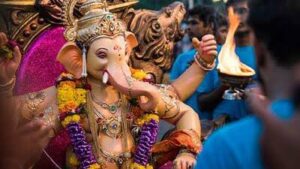
The festival spans 10 days, progressing through carefully orchestrated Vedic rituals.
Culinary Traditions & Offerings
No celebration of Ganesh Chaturthi is complete without preparing Lord Ganesha’s favorite sweet delicacies:
| Dish / Offering | Key Ingredients & Cultural Role |
| Modak | Sweet dumplings stuffed with fresh grated coconut and jaggery, wrapped in steamed rice flour (Ukadiche Modak) or fried. A set of 21 Modaks is traditionally offered as Bhoga. |
| Laddoo (Motichoor / Besan) | Golden gram flour balls sweetened and infused with cardamom and saffron. |
| Puran Poli | Sweet flatbreads filled with a spiced chana dal and jaggery mixture, served warm with ghee. |
| Karanji / Gujiya | Crescent-shaped fried pastries filled with sweetened coconut and dry fruits. |
Quick Summary for Culture Lovers
-
When: 4th lunar day (Chaturthi) of Bhadrapada month (August/September).
-
Core Symbol: Lord Ganesha (Protector against obstacles / Vighnaharta).
-
Key Culinary Delicacy: Steamed coconut-jaggery dumplings (Modak).
-
Climax Event: Anant Chaturdashi immersion processions (Visarjan).