When autumn arrives in Odisha, the historic millennium city of Cuttack transforms into a glittering realm of light, art, and devotion. While Durga Puja is celebrated with fervor across eastern India, Durga Puja in Cuttack stands out as a world-renowned cultural spectacle famous for its breathtaking Chandi Medha—massive backdrops and archways crafted entirely from pure silver filigree (Tarakasi) and gold.
Spanning the lunar month of Ashvina (typically September or October), Durga Puja in Cuttack is not merely a four-day festival; it is a centuries-old tradition that brings together people across communities, showcasing unprecedented craftsmanship, communal harmony, and grand celebrations.
Historical & Cultural Heritage
The roots of Durga Puja in Cuttack date back over four centuries. According to historical records, the saint Sree Chaitanya Mahaprabhu visited Cuttack between 1510 and 1514 AD during the reign of King Prataparudra Deva. He started the tradition of worshipping Goddess Durga at Kadam Rasool and later at Balu Bazar, which remains the oldest continuous Durga Puja committee in the city.
┌────────────────────────────────────────────────────────────────────────┐
│                      HISTORICAL MILESTONES                             │
├────────────────────────────────────────────────────────────────────────┤
│ • 1510s AD: Sree Chaitanya Mahaprabhu visits Cuttack & starts Puja    │
│ • 1956 AD : First Chandi Medha (Silver Backdrop) at Choudhury Bazar   │
│ • 2002 AD : First Suna Medha (Gold Crown & Ornaments) introduced       │
│ • Present : Over 160+ Puja Mandaps with 30+ Silver/Gold Backdrop Medhas│
└────────────────────────────────────────────────────────────────────────┘
What began as modest clay idol worship evolved into an extraordinary display of wealth and artistry in 1956, when the Choudhury Bazar Puja Committee introduced the first Chandi Medha using over 250 kilograms of pure silver filigree. Since then, dozens of historic neighborhoods (Sahi) have joined this artistic rivalry, making Cuttack the world capital of silver-adorned Durga pandals.
The Masterpiece: Chandi Medha & Suna Medha
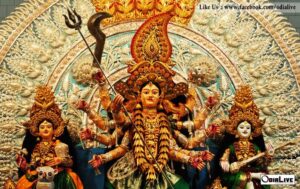
The defining hallmark of Cuttack’s Durga Puja is the Tarakasi (silver filigree) craftsmanship. Instead of temporary cloth or thermocol decorations, Cuttack’s Puja committees erect permanent, intricately carved silver archways behind the clay idols of Goddess Durga and her children (Lakshmi, Saraswati, Ganesha, and Kartikeya).
| Feature | Details |
| Chandi Medha (Silver Arch) | Crafted by master Tarakasi artisans using hundreds of kilograms of fine silver wires drawn into intricate floral, peacock, and geometric patterns. |
| Suna Medha (Gold Accents) | Several prominent committees embellish their silver backdrops with solid gold crowns (Mukuta), necklaces, and weapons for the deities. |
| Eco-Friendly Clay Idols | The main idols are sculpted using natural riverbed clay (Mati) and painted with natural pigments, standing gracefully against the shimmering silver background. |
Prominent Chandi Medha Neighborhoods
-
Choudhury Bazar: The pioneer of Chandi Medha, featuring extensive gold and silver work.
-
Sheikh Bazar: Renowned for using over 350+ kg of pure silver in its massive archway.
-
Kazi Bazar: Features exquisite filigree art depicting scenes from Hindu scriptures.
-
Mangalabag, Chandini Chowk & Ranihat: Famous for grand illuminated arches and gold crowns.
Key Phases of Celebration
Durga Puja in Cuttack progresses through a series of sacred rituals, culminating in a legendary street procession.
Communal Harmony & Street Delicacies
Cuttack’s Durga Puja is a true celebration of community unity (Brotherhood of Cuttack / Kataki Bhaichara). Artisans and craftsmen from all religious backgrounds participate in constructing light gates, silver work, and security management.
Iconic Festival Food
No trip to Cuttack during Durga Puja is complete without savoring its legendary street food:
-
Dahibara Aloodum: Cuttack’s official dish—lentil fritters soaked in spiced yogurt water topped with hot potato curry, severed onions, and coriander.
-
Thunka Puri & Chenna Tarki: Giant crispy puffed puris served with sweet cottage cheese gravy at food stalls surrounding major pandals.
-
Cuttack Kulfi & Rabidi: Cooling milk desserts enjoyed during late-night pandal hopping.
Quick Guide for Travelers
-
Best Time to Visit: September or October (During Navratri to Vijaya Dashami).
-
Key Venues: Choudhury Bazar, Sheikh Bazar, Mangalabag, Ranihat, Balu Bazar, and Kathajodi Riverbank (for Bhasani Yatra).
-
Pro Tip: Plan pandal hopping between midnight and 4:00 AM. The lit-up silver archways look most radiant under night illumination, and street traffic is easier to navigate on foot.