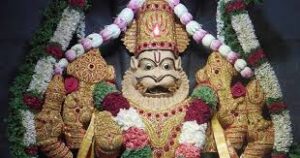
Nrusimha Jayanti (also known as Narasimha Jayanti) is a major Vaishnava festival celebrated across India with deep spiritual fervor. Falling on the fourteenth day (Chaturdashi Tithi) of the bright fortnight (Shukla Paksha) in the lunar month of Vaisakha (typically late April or May), this day commemorates the incarnation of Lord Nrusimha—the fierce fourth avatar (Dashavatara) of Lord Vishnu, who manifested as a half-man, half-lion deity to protect his child-devotee Prahlada and restore cosmic righteousness (Dharma).
The festival holds exceptional significance in Odisha, Andhra Pradesh, Telangana, Karnataka, and Tamil Nadu. In Odisha, it is observed with special temple rituals at Puri Jagannath Dham—where Lord Nrusimha is revered as one of the chief guardian deities—as well as across ancient Shakti-Nrusimha shrines and traditional mathas.
The Sacred Legend of Lord Nrusimha
The epic story of Nrusimha Jayanti is immortalized in the Srimad Bhagavatam (Bhagavata Purana).
┌────────────────────────────────────────────────────────────────────────┐
│                        LEGEND OF NRUSIMHA AVATAR                       │
├────────────────────────────────────────────────────────────────────────┤
│ • Hiranyakashipu's Boon ──► Cannot be killed by man/animal, indoors/   │
│                             outdoors, day/night, or with any weapon    │
│ • Prahlada's Devotion   ──► Unshakable faith in Vishnu despite torture │
│ • The Pillar Challenge  ──► Demon king asks: "Is your God in this post?"│
│ • Divine Manifestation  ──► Nrusimha emerges, bypassing all boon rules │
└────────────────────────────────────────────────────────────────────────┘
-
The Impossible Boon: The tyrant demon king Hiranyakashipu obtained a boon from Lord Brahma that he could not be killed by human or animal, by any weapon, inside or outside a house, during day or night, on land, water, or air. Believing himself invincible, he banned the worship of Vishnu across his realm.
-
Prahlada’s Unshakable Faith: Hiranyakashipu’s young son, Prahlada, remained a devoted follower of Lord Vishnu despite severe persecution and assassination attempts ordered by his father.
-
The Pillar and the Twilight Hour: When an enraged Hiranyakashipu kicked a marble pillar in his palace, challenging whether Vishnu resided inside it, Lord Nrusimha emerged from the splitting pillar with a roar. At dusk (Sandhya Kala—neither day nor night), sitting on the threshold (neither inside nor outside), holding Hiranyakashipu on his lap (neither land nor sky), Lord Nrusimha tore the demon open with his sharp claws (neither man-made nor divine weapon), fulfilling Brahma’s boon while protecting his pure devotee.
Key Ritual Sequence of Nrusimha Jayanti
Devotees observe strict purificatory vows, fasts, and evening worship during Nrusimha Jayanti, matching the twilight hour of the Lord’s arrival.
Regional Significance: Srimandir & Odisha Traditions
In Odisha, Lord Nrusimha occupies a vital role in temple theology:
| Temple / Tradition | Unique Ritual & Cultural Significance |
| Srimandir (Puri) | Lord Nrusimha is considered the protector of the Jagannath Temple’s secret rituals. A special Nrusimha Janma Niti (birth ritual) is conducted inside the temple complex on the Nrusimha Temple premises near Mukti Mandap. |
| Pana & Cooling Drinks | Due to the blistering summer heat of Vaisakha, large earthen pots of sweet Bela Pana, Majjiga (spiced buttermilk), and Chhena Pana are distributed to pilgrims to cool the deity’s fierce energy. |
| Traditional Drama | In southern Odisha and Andhra border regions, folk troupes stage open-air Prahlada Nataka plays re-enacting the confrontation between Hiranyakashipu and Nrusimha. |
Traditional Culinary Delicacies
Offerings made on Nrusimha Jayanti focus on cooling ingredients to soothe the fierce deity:
| Offering | Ingredients & Symbolism |
| Panakam / Pana | A refreshing blend of water, jaggery, black pepper, cardamom, and edible camphor offered to beat the summer heat and calm the deity. |
| Chhena Gaja / Manda | Fresh cottage cheese sweets offered in temple Bhoga. |
| Dahi Sadam / Dahi Anna | Cool curd rice tempered with mustard seeds, curry leaves, and ginger. |
| Sprouted Grams & Fruits | Freshly sprouted moong dal mixed with grated coconut and pomegranate seeds. |
Quick Summary for Culture Enthusiasts
-
When: 14th lunar day (Chaturdashi) of the bright fortnight of Vaisakha month (April / May).
-
Core Symbol: The half-man, half-lion avatar (Nrusimha) emerging from a pillar at dusk.
-
Key Custom: Afternoon/dusk fast broken only after twilight Abhishekam.
-
Primary Theme: Divine protection, the triumph of unshakable devotion (Bhakti) over ego, and protection from negative energies.