Gokulastami (commonly known across India as Krishna Janmashtami, Srikrishna Jayanti, or simply Janmashtami) is one of the most widely celebrated Vaishnava festivals in the Hindu calendar. Falling on the eighth day (Ashtami Tithi) of the dark fortnight (Krishna Paksha) of the lunar month of Bhadrapada (August/September), this auspicious occasion commemorates the advent of Lord Krishna—the eighth avatar of Lord Vishnu—who descended to Earth to destroy tyranny, restore righteousness (Dharma), and reveal the eternal philosophy of the Bhagavad Gita.
Across India, the festival holds immensely rich regional variations. In Vrindavan and Mathura, it manifests as deep scriptural devotion; in Maharashtra, as high-energy Dahi Handi sports; and in Odisha and eastern India, as an intricate blend of temple Niti (rituals), home altar decorations, and traditional dairy offerings.
Mythological Origin & Spiritual Significance
The narrative of Gokulastami revolves around divine intervention during a period of dark oppression in ancient India.
┌────────────────────────────────────────────────────────────────────────┐
│                     THE DIVINE NARRATIVE & SYMBOLISM                   │
├────────────────────────────────────────────────────────────────────────┤
│ • Midnight Birth     ──► Born in Kansa's dungeon during stormy night  │
│ • The Miraculous Crossing ──► Vasudeva carries infant Krishna across Yamuna │
│ • Safe Haven in Gokul ──► Raised by Yashoda & Nanda Maharaj            │
│ • Cosmic Purpose     ──► Triumph of Dharma over Kansa's tyranny        │
└────────────────────────────────────────────────────────────────────────┘
-
The Midnight Descent: Born to Devaki and Vasudeva in a dark prison cell in Mathura, Lord Krishna’s birth occurred amidst torrential rains and roaring thunder. To protect the newborn from his tyrannical uncle, King Kansa, Vasudeva miraculously carried the infant across the swollen Yamuna River to the village of Gokul, placing him under the loving care of Nanda Maharaj and Yashoda.
-
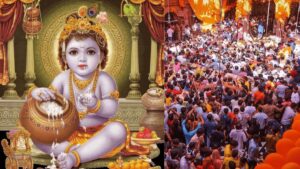
Symbol of Divine Joy: Krishna represents the supreme embodiment of divine love (Prema), wisdom, and playfulness (Leela). His childhood antics as the “Butter Thief” (Makhan Chor) symbolize God’s accessible, affectionate connection with his devotees.
Key Ritual Sequence of Gokulastami
The festival spans midnight worship on Ashtami and transitions into joyful celebrations on the following day (Nandotsav).
Culinary Traditions & Offerings
Because Lord Krishna is renowned for his love of dairy and simple grains, the Naivedya prepared on Gokulastami heavily features milk, butter, and flattened rice:
| Offering | Key Ingredients & Cultural Role |
| Makhan Mishri | Freshly churned unsalted white butter mixed with rock sugar crystals; Lord Krishna’s ultimate favorite offering. |
| Panjiri / Dhaniya Panjiri | A nutritious mixture of roasted coriander seed powder, ghee, powdered sugar, and dry fruits, specially offered as prasad after midnight. |
| Gopalbhog / Jeera Pitha | In Odia households, sweet preparations of flattened rice (Chuda), coconut, milk, and banana are offered during midnight worship. |
| Kheer / Rabri | Rich condensed milk puddings flavored with cardamom, saffron, and pistachios. |
Quick Summary for Culture Enthusiasts
-
When: 8th lunar day (Ashtami) of the dark fortnight of Bhadrapada month (August / September).
-
Core Symbol: Infant Krishna (Ladoo Gopal) in a flower-adorned swing (Jhula) and peacock feathers.
-
Key Culinary Delicacies: White butter with rock sugar (Makhan Mishri) and Dhaniya Panjiri.
-
Next-Day Festival: Nandotsav and high-energy Dahi Handi celebrations.