Chhau Dance is a semi-classical Indian dance form with martial, tribal, and folk roots native to eastern India—specifically Odisha, Jharkhand, and West Bengal. In 2010, UNESCO inscribed Chhau onto the Representative List of the Intangible Cultural Heritage of Humanity.
The festival reaches its peak during the annual Chaitra Parva (spring festival in mid-April), where performers gather to reenact episodes from the Ramayana, Mahabharata, Puranas, and regional folklore through high-energy acrobatics and rhythmic martial movements.
The Three Styles of Chhau
Chhau is categorized into three distinct regional styles, named after the locations where they developed:
| Style | Origin / Region | Defining Feature | Mask Usage |
| Mayurbhanj Chhau | Odisha (Mayurbhanj district) | Focuses on fluid body mechanics, martial stances (Chhak), and high kicks (Ufli). | No Masks Used (Expressive facial movements) |
| Seraikella Chhau | Jharkhand (Seraikella region) | Highly stylized, symbolic movements emphasizing mood and subtle grace. | Pastel Clay Masks (Representing characters & concepts) |
| Purulia Chhau | West Bengal (Purulia district) | Highly athletic, acrobatic leaps, flips, and vigorous combat choreography. | Elaborate, Heavy Masks with intricate headgear |
Mythological & Martial Foundations
The word Chhau originates either from the Sanskrit Chhaya (shadow/mask) or the Odia word Chhauni (military encampment).
┌────────────────────────────────────────────────────────────────────────┐
│                        CORE ELEMENTS OF CHHAU                          │
├────────────────────────────────────────────────────────────────────────┤
│ • Martial Techniques  ──► Shield & sword stances (Pari-khanda)         │
│ • Nature & Animals    ──► Movements imitating peacocks, deer, tigers   │
│ • Musical Accompaniment ──► Dhol, Dhamsa (kettle drum), Shehnai, Mahuri │
│ • Themes              ──► Triumph of Good over Evil (Dharma)           │
└────────────────────────────────────────────────────────────────────────┘
-
Pari-Khanda Heritage: The movement vocabulary of Chhau originates from Pari-Khanda (the practice of shield and sword fighting used by ancient warrior communities like the Paikas of Odisha).
-
Rural & Nature Motifs: Dancers execute steps (Chali) that mimic everyday rural life—such as women fetching water, farmers tilling fields, or animals stalking prey.
The Chaitra Parva Festival Rituals
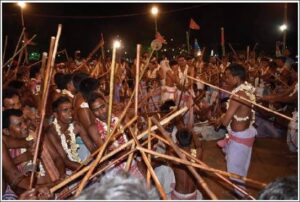
The Chhau festival takes place over several days during the spring transition.
Global Recognition & Preservation
Chhau has evolved from a local martial pastime into an internationally recognized dance genre. State academies, cultural trusts, and UNESCO initiatives work to preserve the intricate mask-crafting traditions and support hereditary master gurus (Ustad/Gurus) who pass down the unwritten choreography through generations.
Quick Summary for Culture Lovers
-
When: Mid-April during Chaitra Parva (Spring Festival).
-
Key Regions: Mayurbhanj (Odisha), Seraikella (Jharkhand), Purulia (West Bengal).
-
Key Instruments: Dhol, Dhamsa, and Mahuri (pipe).
-
UNESCO Status: Inscribed as Intangible Cultural Heritage in 2010.