Niladri Bije is the grand concluding festival of the world-famous Ratha Yatra in Puri, Odisha. The term Niladri refers to Srimandir (the abode of Lord Jagannath on the Blue Mountain), while Bije means “royal entrance.” Occurring on the thirteenth day (Trayodashi) of the bright fortnight of the month of Ashadha (June/July), this ritual marks the exact moment Lord Jagannath, Lord Balabhadra, Devi Subhadra, and Sudarshana re-ascend the Ratnavedi (jeweled throne) inside the inner sanctum.
It concludes the 12-day annual outing of the divine siblings, bringing an end to the outdoor festivities and restoring the regular temple rituals.
Mythological & Cultural Significance
Niladri Bije is famous for blending deep devotion with humanized, endearing storytelling. It highlights the sweet romantic conflict between Lord Jagannath and his consort, Goddess Mahalaxmi.
┌────────────────────────────────────────────────────────────────────────┐
│                      SIGNIFICANCE OF NILADRI BIJE                      │
├────────────────────────────────────────────────────────────────────────┤
│ • Return to Ratnavedi ──► Deities re-enter the inner sanctum           │
│ • Domestic Dispute    ──► Mahalaxmi locks the temple gate in anger     │
│ • Rasagola Sweet    ──► Offered by Lord Jagannath to appease Laxmi   │
│ • Rasagola Dibasa    ──► Celebrated across Odisha as Sweet Day         │
└────────────────────────────────────────────────────────────────────────┘
-
The Divine Anger: Having been left behind at Srimandir while the siblings visited their aunt at Gundicha Temple, Goddess Mahalaxmi is deeply hurt. On Niladri Bije, as Lord Jagannath approaches the Lion’s Gate (Simhadwara), she orders her servitors to slam the Jaya-Vijaya gate shut, blocking His path.
-
The Sweet Peace Offering: To soothe her anger, Lord Jagannath offers her soft, juicy Odia Rasagolas. Touched by the gesture, Goddess Mahalaxmi opens the doors, allowing Lord Jagannath to re-enter the temple and take His seat on the Ratnavedi.
Key Rituals of Niladri Bije
The re-entry of the deities is conducted in a series of steps by specific groups of servitors (Sewayatas).
Rasagola Dibasa (Odisha’s Rasagola Day)
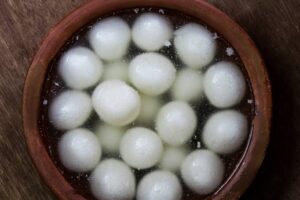
Because of Lord Jagannath’s centuries-old tradition of offering Rasagola to Goddess Mahalaxmi on Niladri Bije, this day is officially celebrated as Rasagola Dibasa across Odisha.
| Historical & Cultural Aspect | Details |
| Centuries-Old Lineage | The tradition of offering cottage cheese sweets (Kheer Mohan / Rasagola) in Puri Srimandir dates back over 800 years. |
| GI Tag Recognition | In July 2019, “Odisha Rasagola” received the official Geographical Indication (GI) tag, recognizing its distinct soft texture, off-white hue, and non-rubbery chewiness soaked in non-thick syrup. |
| Mass Distribution | On Niladri Bije, sweet makers and devotees across Odisha distribute thousands of kilograms of free Rasagolas in towns and villages. |
Quick Summary for Culture Lovers
-
When: 13th lunar day (Trayodashi) of Ashadha month (June/July).
-
Key Emotion: Reconciliation, warmth, and divine domestic harmony.
-
Key Culinary Tradition: Offering and sharing of traditional Odia Rasagola.
-
Significance: Marks the official conclusion of the annual Ratha Yatra festival cycle.