Set against the pristine, snow-white backdrop of the Dhauli Peace Pagoda (Shanti Stupa) on the outskirts of Bhubaneswar, Kalinga Mahotsav is one of India’s most unique cultural festivals. Held annually in February, this dynamic three-day festival brings together traditional martial art forms, folk dances, and classical genres from across India on a single stage.
The festival carries a profound historic purpose: to commemorate the tragic Kalinga War fought in 261 BC along the banks of the nearby Daya River, and to celebrate the ultimate victory of peace, harmony, and non-violence (Ahimsa) over war and destruction.
Historical Context: From Bloody War to Universal Peace
The foothills of Dhauli hold immense historical significance in World and Indian history.
┌────────────────────────────────────────────────────────────────────────┐
│                      THE HISTORIC METAMORPHOSIS                        │
├────────────────────────────────────────────────────────────────────────┤
│ • 261 BC: The Great Kalinga War turns the Daya River red with blood   │
│ • Emperor Ashoka witnesses carnage and renounces violence & warfare    │
│ • Ashoka embraces Buddhism, preaching peace (*Ahimsa*) across Asia    │
│ • 1972 AD: Indo-Japanese Buddhist Society builds Dhauli Peace Pagoda   │
│ • Present: Kalinga Mahotsav honors transformation of weapon into art   │
└────────────────────────────────────────────────────────────────────────┘
It was on these very grounds that Emperor Ashoka witnessed the devastation of the Kalinga War, where over 100,000 lives were lost. Horrified by the bloodshed, Ashoka laid down his sword, converted to Buddhism, and transformed from Chandashoka (Ashoka the Fierce) into Dharmashoka (Ashoka the Righteous).
Kalinga Mahotsav is structured around this theme of transforming weapons of destruction into instruments of artistic grace.
Showcase of Martial Art & Folk Dance Forms
The primary attraction of Kalinga Mahotsav is its thrilling display of indigenous martial dance forms (Yuddha Nrutya) alongside classical and folk styles. Troupes from every corner of India gather to present their centuries-old combat traditions:
| Martial / Folk Art | Origin State | Key Features & Performances |
| Paika Akhada | Odisha | Traditional Odia warrior dance featuring swords, shields, staff spinning, and high-flying acrobatics. |
| Mayurbhanj Chhau | Odisha | Masked martial dance showcasing athletic leaps, leg strikes (Ufli), and mock battles depicting Purana epics. |
| Kalaripayattu | Kerala | Ancient Indian martial technique incorporating flexible sword fights (Urumi), shields, and high kicks. |
| Thang-Ta | Manipur | Graceful yet deadly sword and spear martial dance executed with rhythmic footwork. |
| Gatka | Punjab | Sikh martial tradition utilizing wooden sticks (Soti), swords, and shields in energetic duels. |
| Chholiya | Uttarakhand | Sword dance from the Kumaon region performed during royal processions. |
| Gotipua & Odissi | Odisha | Lyrical, acrobatic classical dance forms offering a artistic contrast to the intense martial displays. |
The Festival Atmosphere & Setting
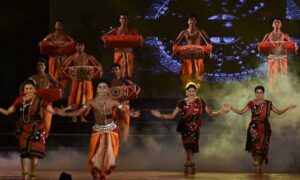
Kalinga Mahotsav is jointly organized by the Odisha Department of Tourism and the Art Vision Academy (founded by renowned Odissi exponent Padma Shri Iliana Citaristi).
┌────────────────────────────────────────────────────────┐
│                   FESTIVAL HIGHLIGHTS                  │
├────────────────────────────────────────────────────────┤
│ • Open-Air Venue ──► Dhauli Hilltop under open sky     │
│ • Illumination   ──► Stupa glows in brilliant white/gold│
│ • Soundscape     ──► Martial drums, conch shells & gongs│
│ • Message        ──► Global harmony & non-violence     │
└────────────────────────────────────────────────────────┘
-
Dhauli Hilltop Stage: The open-air stage is positioned right at the foot of the Dhauli Peace Pagoda, which looms majestically overhead illuminated by soft floodlights.
-
National Integration: By featuring warrior traditions from Northern, Southern, Eastern, and North-Eastern India together, the festival celebrates the martial heritage and cultural unity of the country.
Quick Guide for Travelers
-
Dates: February every year (usually over 3 continuous days).
-
Venue: Dhauli Peace Pagoda Footsteps, Dhauli Hills, Bhubaneswar, Odisha.
-
Nearest Transit: Biju Patnaik International Airport, Bhubaneswar (~12 km) or Bhubaneswar Railway Station (~10 km).
-
Pro Tip: Arrive at Dhauli Hills early in the afternoon to visit the ancient Ashokan Rock Edicts and the Dhauli Peace Pagoda complex before taking your seat at the open-air auditorium for the evening performances starting around 6:00 PM.