Gajalaxmi Puja (also spelled Gaja Lakshmi Puja) is one of the most magnificent autumn festivals celebrated across Odisha. Beginning on Kumar Purnima—the full moon day of the Hindu lunar month of Ashvina (typically October)—this festival is dedicated to Goddess Gajalaxmi, the manifestation of Lakshmi who bestows wealth, abundance, royal prosperity, and agricultural good fortune.
While Lakshmi Puja is observed across India on Diwali night, Odisha celebrates Goddess Lakshmi on a grander scale during Kumar Purnima, stretching the festivities across 7 to 11 continuous days. Entire towns transform into glowing open-air galleries featuring massive thematic pandals, intricate clay idols, and miles of illuminated street gates.
Mythological Significance of Gajalaxmi
The form of Gajalaxmi is one of the most auspicious representations of the divine mother in Hindu iconography:
┌────────────────────────────────────────────────────────────────────────┐
│                     ICONOGRAPHY OF GAJALAXMI                           │
├────────────────────────────────────────────────────────────────────────┤
│ • Goddess Lakshmi  ──► Seated on a four-petaled lotus in padmasana     │
│ • Four Arms        ──► Representing Dharma, Kama, Artha, and Moksha    │
│ • Twin Elephants   ──► White elephants (Gaja) bathing her with water   │
│ • Kalasa & Lotus   ──► Holding royal water pitchers & blooming lotus   │
└────────────────────────────────────────────────────────────────────────┘
According to legend, during the celestial churning of the ocean (Samudra Manthan), Goddess Lakshmi emerged on Kumar Purnima holding a lotus flower. Divine white elephants (Diggajas) showered her with holy water from golden urns (Kalasa) to honor her as the supreme sovereign of fortune and prosperity.
Epicenters of Celebration: Dhenkanal & Kendrapara
While Gajalaxmi Puja is celebrated in homes and neighborhoods throughout Odisha, two towns are globally famous for their scale and cultural grandeur:
1. Dhenkanal: The Cultural Capital of Laxmi Puja
Dhenkanal is synonymous with Gajalaxmi Puja. Dating back to 1923 at Meena Bazar, the festival in Dhenkanal has grown into an 11-day mega event hosting over 40 to 50 grand Puja Committees.
-
Illuminated Light Gates: Miles of light archways feature animated light designs depicting mythological stories, social themes, and modern architecture.
-
Massive Fairs: The entire district headquarters turns into a giant night carnival with commercial trade expos, food stalls, and amusement parks attracting over a million visitors.
2. Kendrapara: The Coal-Belt & Port Celebration
Kendrapara celebrates Gajalaxmi Puja with equal fervor, tracing its tradition back nearly a century.
-
Known for its detailed clay idols depicting intricate facial expressions and traditional golden foil work (Jari Medha).
-
Features elaborate night processions and traditional music competitions.
Key Ritual Sequence of the Festival
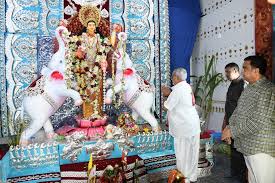
The festival progresses across a week-long series of devotional rites and public viewings.
Cultural Delicacies & Street Food
Gajalaxmi Puja is a paradise for food lovers. Alongside traditional temple offerings (Prasad), street vendors set up special stalls across fairgrounds:
| Dish / Sweet | Description |
| Khai Chanda & Muan | Crisp puffed paddy mixed with melted jaggery, cardamom, and coconut chips, offered primarily during Kumar Purnima. |
| Chenna Jhili & Rasagola | Fried cottage cheese patties soaked in sugar syrup, widely distributed at pandal stalls. |
| Dahibara Aloodum & Ghuguni | A popular street food enjoyed by late-night visitors touring illuminated pandals. |
Quick Guide for Visitors
-
Best Time to Visit: October / November (Starting on Kumar Purnima night and lasting 7 to 11 days).
-
Key Destinations: Dhenkanal Town, Kendrapara Town, Choudwar, and Angul.
-
Pro Tip: Nighttime is the best time to experience the festival. Plan to visit between 7:00 PM and 2:00 AM to see the illuminated light gates, animated tableaus, and street markets at their peak.