Prathamastami is a unique and cherished festival in Odisha dedicated to honoring the firstborn child (Pudhan or Prathama) of every family. Observed on the eighth day (Ashtami) of the dark fortnight in the Hindu month of Margasira (typically late November or December), this festival prays for the longevity, health, prosperity, and success of the eldest child.
In Odia culture, the eldest child holds a significant duty of continuing the family lineage, heritage, and responsibilities. Prathamastami is a deeply emotional, family-centric ritual that celebrates this vital role with new clothes, traditional prayers, and iconic culinary delicacies like Enduri Pitha.
The Cultural & Spiritual Significance
Unlike festivals that revolve around specific temple deities or seasonal harvests, Prathamastami places the child at the center of worship.
┌────────────────────────────────────────────────────────────────────────┐
│                     CORE ELEMENTS OF PRATHAMASTAMI                     │
├────────────────────────────────────────────────────────────────────────┤
│ • Honoring the Firstborn ──► Prayers for long life, health & success   │
│ • Maternal Uncle's Role  ──► Maternal uncle (Mamu) sends gifts         │
│ • Enduri Pitha Tradition ──► Steamed cake wrapped in turmeric leaf     │
│ • Lingaraj Temple Connection ──► Lord Lingaraj visits Kapali Matha     │
└────────────────────────────────────────────────────────────────────────┘
The festival also strengthens familial bonds, particularly the relation between the child and their maternal uncle (Mamu). According to tradition:
-
The maternal uncle brings new clothes, sweets, rice, and traditional ingredients required for the rituals.
-
The child wears these new clothes provided by the Mamu during the blessing ceremony.
Key Rituals: How Prathamastami is Celebrated
The rituals are performed primarily by the mother and senior female relatives of the household.
The Culinary Icon: Enduri Pitha
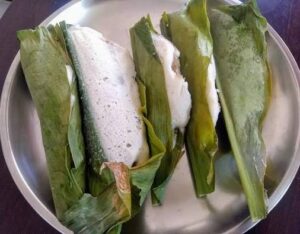
No discussion of Prathamastami is complete without Enduri Pitha (also known as Haladi Patra Pitha). It is one of the few traditional Indian dishes where food is steamed using fresh turmeric leaves.
| Ingredient / Aspect | Details |
| Outer Batter | A ground, fermented batter made of black gram (Urad Dal) and rice. |
| Sweet Filling | Grated coconut cooked with jaggery, black pepper, and green cardamom. |
| Wrapping Leaf | Fresh green turmeric leaves (Haladi Patra). |
| Cooking Technique | Steamed in a special earthen vessel called an Athara Nali Pot. |
Health Benefits of Turmeric Leaf Steaming
Beyond its aromatic flavor, steaming inside turmeric leaves infuses the pitha with curcumin, which acts as a natural immunity booster during the onset of winter—reflecting the deep medicinal wisdom embedded in Odia culinary traditions.
Temple Observance: Lord Lingaraj at Kapali Matha
Prathamastami is also celebrated with grand pomp at the 11th-century Lingaraj Temple in Bhubaneswar.
On this day, the representative deity of Lord Lingaraj, Chandrasekhara, is taken in a grand procession to the nearby Kapali Matha (the temple of his maternal uncle). There, Lord Lingaraj is honored as the “firstborn” of the realm and receives ritual blessings, new robes, and special Enduri Pitha offerings.
Summary for Culture Lovers
-
When: 8th day (Ashtami) of the dark fortnight in Margasira month (November/December).
-
Key Symbol: Fresh green turmeric leaves (Haladi Patra) and Enduri Pitha.
-
Core Spirit: Family affection, honoring elders and maternal bonds, and winter health protection.